Culture & Preservation
On remembering a city.
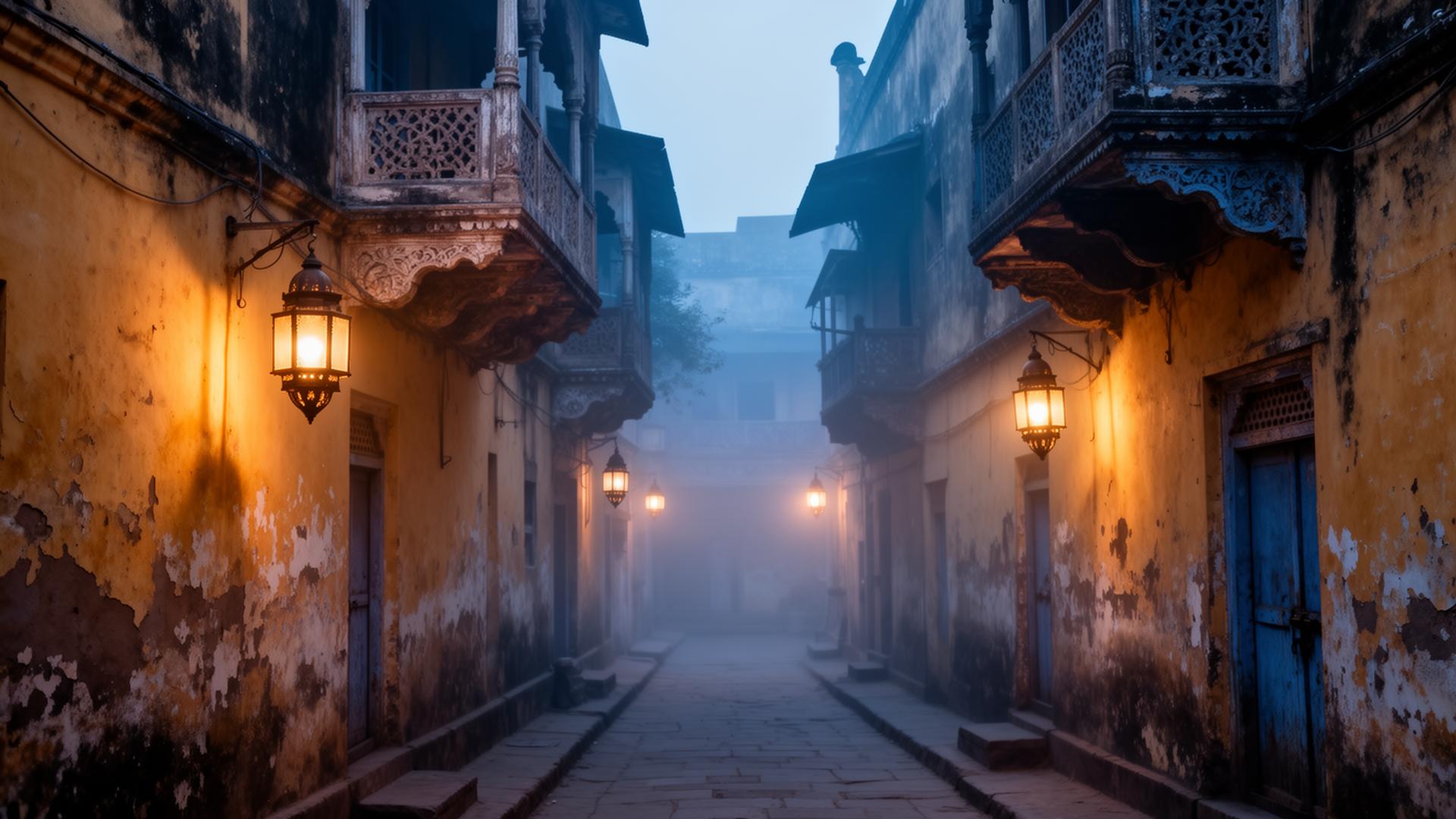
"Old cities do not die. They are either remembered, or forgotten. The Haveli is how we remember."
Lahore is, by some measures, four thousand years old. Each layer in its plan holds a different empire. Mughal, Sikh, colonial, post-colonial. Every generation believed it was improving on the last. Most of them were wrong, and the city quietly absorbed both their additions and their misjudgements.
The argument that an old city must be modernized is rarely an argument about people. It is an argument about ease. To build inside a constraint is harder than to clear it away. A heritage facade, a protected courtyard, a street that bends because it has always bent. These are not obstacles. They are the terms of engagement. The work of preservation is the work of taking the harder path on principle.
Chapter · Pak Tea House & the Haveli
Two rooms of one argument.
Pak Tea House opened on Mall Road in 1940 as the India Tea House and was renamed after Partition. Its regulars were the literary spine of mid-century Lahore: Faiz Ahmed Faiz, Saadat Hasan Manto, Amrita Pritam, Habib Jalib, Nasir Kazmi, Ahmed Nadeem Qasmi, Munir Niazi, Intizar Husain. It was the public meeting-ground of the Progressive Writers' Association and the Halqa-e-Arbab-e-Zauq.
Haveli Barood Khana was the private counterpart of the same world. Iqbal, Jinnah, Hali, Faiz and Sir Syed's circle are all recorded as visitors. Where the Tea House was open to anyone with the price of chai, the Haveli was where the same generation's political and cultural elite gathered after hours. Between the two rooms, between 1940 and 1947, Pakistan was argued into existence.
Concerns
Where the work is.
Walled City Conservation
Arts Patronage
Anjuman Himayat-e-Islam
Public Conversation
Chapter · Virsa
The courtyard, still in use.
Under Yousaf Salahuddin, Ali Shah's uncle and the maternal grandson of Allama Iqbal, the Haveli's courtyard hosts Virsa: Heritage Revived, the PTV programme that has launched Rahat Fateh Ali Khan, Sanam Marvi, Sahir Ali Bagga, Hina Nasrullah and Sara Raza Khan. The concerts run under the same wooden roof that once sheltered Iqbal, Jinnah and Faiz. Patronage, here, is not a memory. It is a continuing job.
نہ سمجھو گے تو مٹ جاؤ گے اے ہندوستاں والو ۔ تمہاری داستاں تک بھی نہ ہوگی داستانوں میں
“If you will not understand, you shall be effaced, O dwellers of Hindustan. Not even your tale will remain among the tales of nations.”
What shapes the work
Readings & influences.
- Invisible CitiesItalo Calvino
- Anti-ObjectKengo Kuma
- A Pattern LanguageChristopher Alexander
- City of Sin and Splendour: Writings on LahoreBapsi Sidhwa
- Complete WorksVincent Van Duysen
- Bal-e-JibrilAllama Iqbal
- The Death and Life of Great American CitiesJane Jacobs
- Working in PublicStripe Press
In the press
The Haveli, on the record.
Architectural Digest
Middle East · 2025
Inside a 400-year-old Lahore home still lived in today.
A long visit with Mian Yousuf Salahuddin and the family, inside Haveli Barood Khana. Four decades of continuous restoration, five courtyards, and the sitting room shared by Ali and his brother Omar.
Read the feature