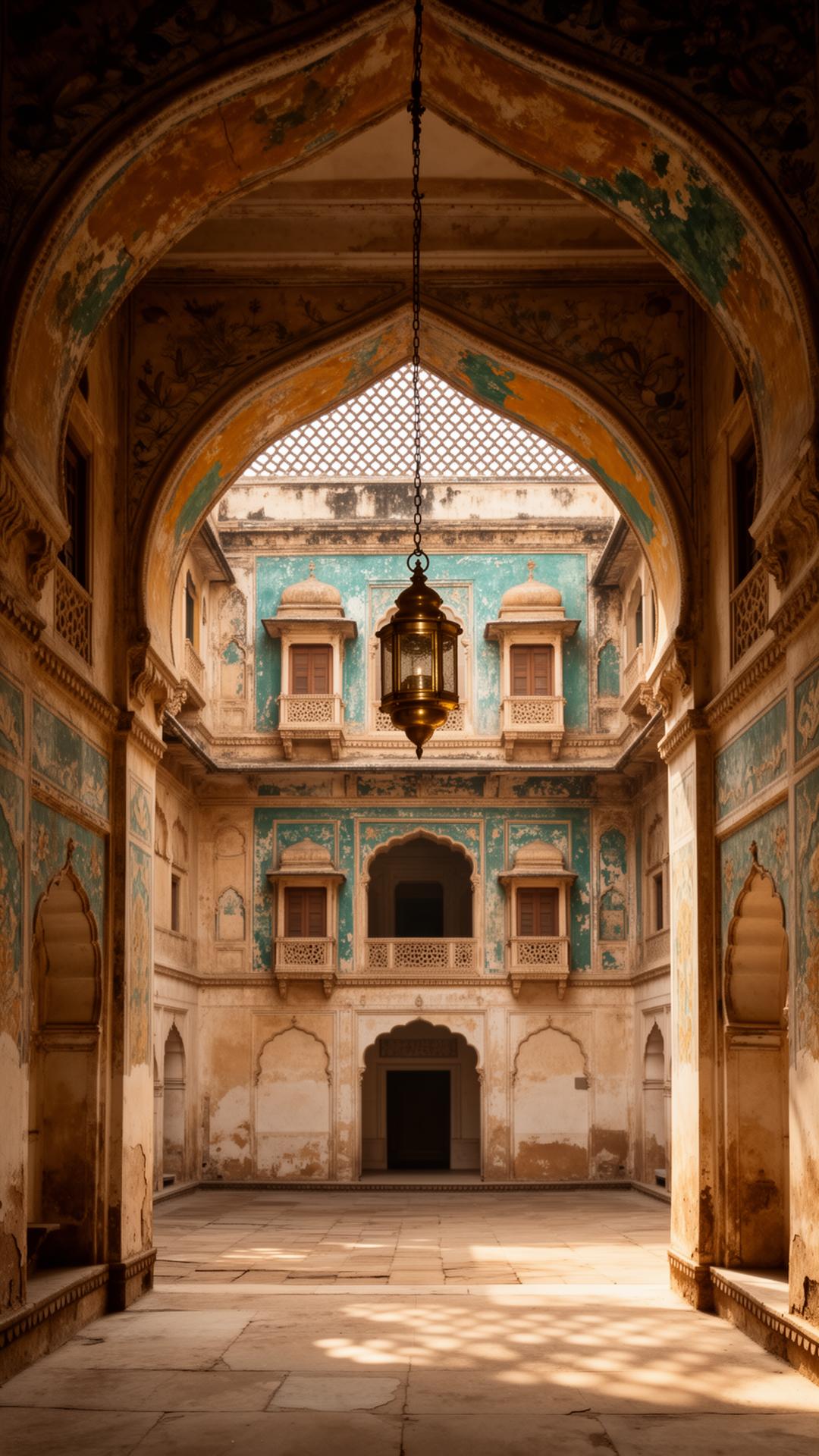
Haveli Barood Khana · Walled City of Lahore
Some families build companies.
Some families build cities.
The Barood Khana family has kept watch over a single house in old Lahore for nearly two centuries. This is what they have built, and what has been built around them.
یہ گھر بنایا ہے کس نے ، یہ پوچھتا ہے کوئی ۔ مرا جواب ہے ، نسلوں کی محنتوں نے بنایا
“Who, you ask, has built this house? My answer is: the labour of generations.”
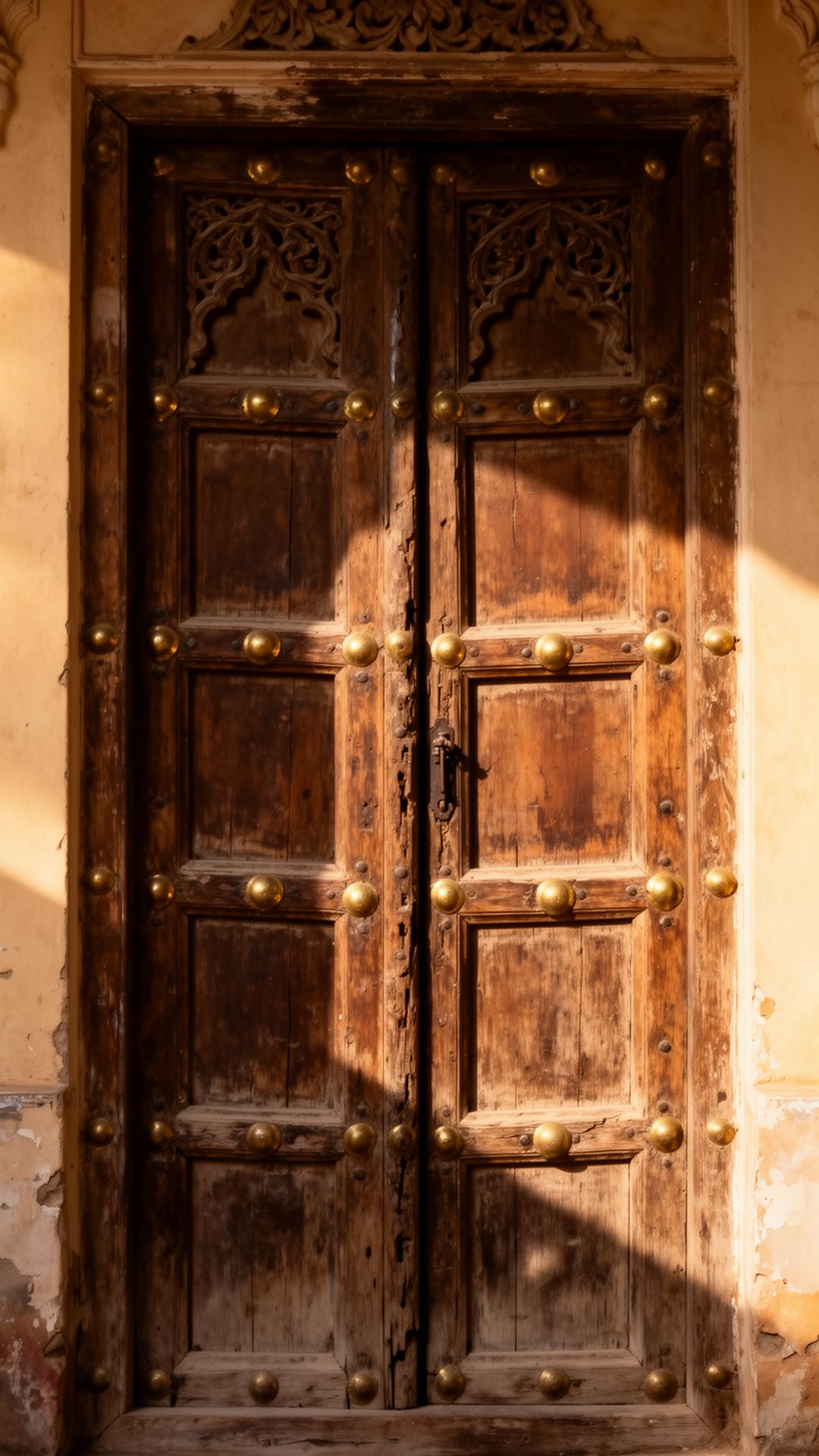
Chapter I · The House Before the Family
An 18th-century arms depot, facing the Fort.
Haveli Barood Khana stands in the Chabuk Sawaran neighbourhood of Lahore's Walled City, directly facing the Lahore Fort. It was commissioned in the 18th century by a commanding general of the Sikh Army under Maharaja Ranjit Singh as both residence and the city's principal ammunition depot. Barood Khanaliterally means "powder house" in Urdu.
Built in the Mughal-Sikh style, with jharokhas, carved wooden balconies, a deep courtyard, a Sheesh Mahal of glass, and a prayer room that once held the Granth Sahib. The house sits a few minutes' walk from Taxali Gate, the Badshahi Mosque, and the shrine of Pir Hazrat Baba Nauguzah. To live here is to live at the literal compression-point of Mughal, Sikh, British and Pakistani Lahore.
Around 1901, the haveli was divided into a Zanan Khana and a Mardan Khana; the latter was, for a time, run by the family as a cinema house.
Chapter II · The Arrival, c. 1840
Mian Karim Baksh: contractor to the Raj.
Towards the end of the Sikh period the family came down from Kashmir, first to Sialkot and then to Lahore, where Mian Karim Baksh acquired the Haveli from the Sikh general who had built it. From that moment, the family's identity fused with the house: they became known simply as the Barood Khana Family.
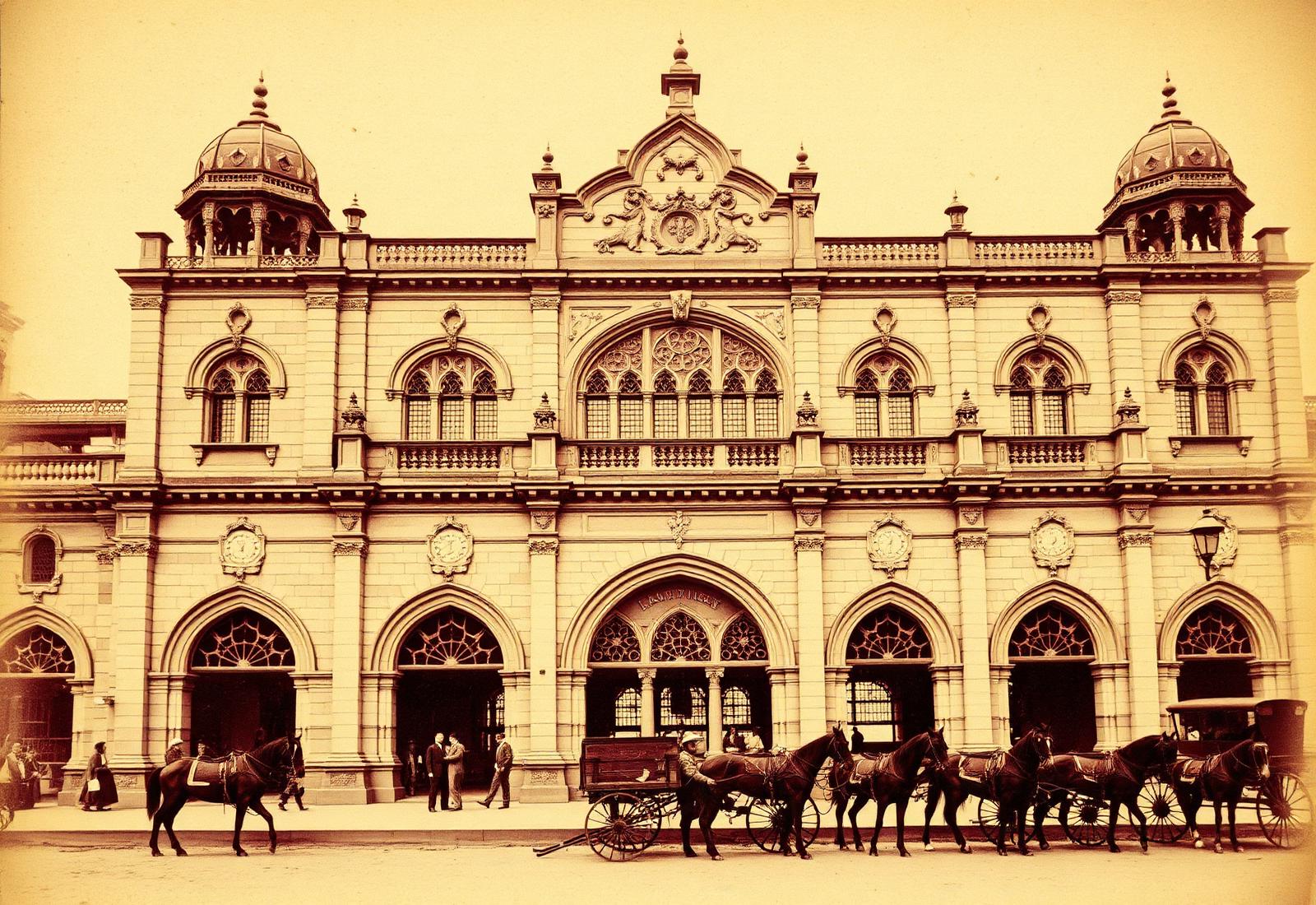
He rose to become Municipal Commissioner of Lahore and the pre-eminent contractor to the British Raj. His firm built three of the city's defining landmarks: Lahore Railway Station, the Lahore Town Hall, and Government College Lahore, the institution where, a generation later, a young Iqbal would take his MA in Philosophy.
In 1884, with a circle that included Sir Muhammad Iqbal, Nawab Sir Fateh Ali Khan Qazilbash, and Mian Sir Muhammad Shafi, he helped found Anjuman Himayat-e-Islam at a mosque inside Mochi Gate. The Anjuman would go on to establish Islamia College Lahore (1892), Islamia College for Women, and a network of schools, orphanages and widows' homes across the late nineteenth and twentieth centuries.
It is here, in the founding circle of the Anjuman, that the Barood Khana family and the Iqbal family first orbit each other.
Chapter III · The Lord Mayor
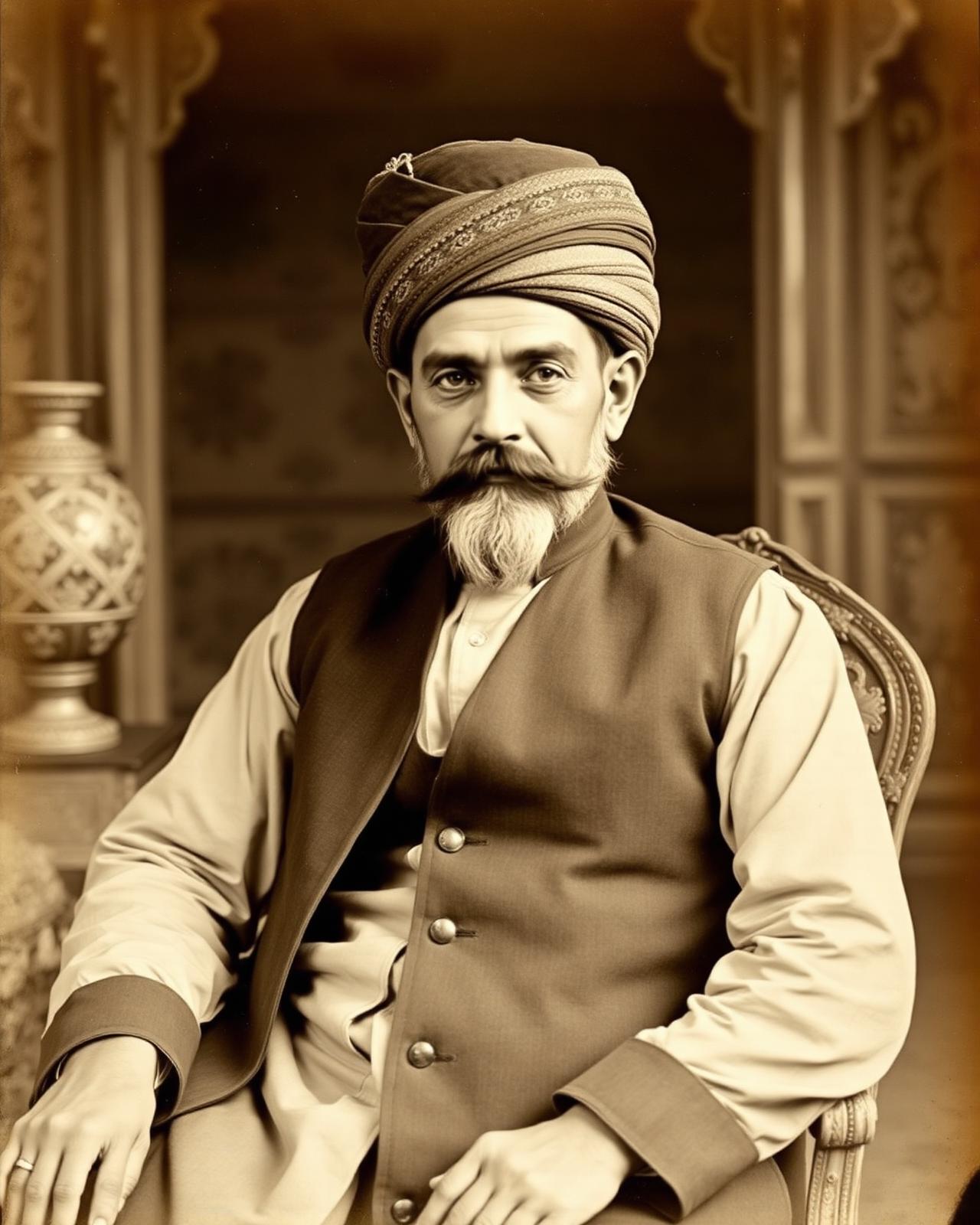
Mian Amiruddin, 1940 – 1949.
Son of Karim Baksh. Financial Secretary of the Punjab Muslim League. Central figure in the All-India Muslim League during the years of the Pakistan Movement. Present at the adoption of the Lahore Resolution on 23 March 1940 at Minto Park, the resolution that articulated the case for an independent Muslim state.
In 1947 he was elected the first Muslim Lord Mayor of Lahore and held the office across the partition years, 1947 – 1949. The Haveli, in this period, was not a bystander to the Pakistan Movement. It was one of its rooms. Iqbal, Jinnah, Sir Syed Ahmad Khan's circle, Hali, Faiz Ahmed Faiz, M. Aslam and Sheikh Abdullah are all recorded as regular visitors.
"He believed a city was a covenant. So has every Barood Khana since."
Chapter IV · The Iqbal Bloodline
Yousaf Salahuddin, grandson of the poet.
Iqbal's daughter married into the Barood Khana family. Their son, Mian Yousaf Salahuddin, known across Lahore simply as Yousaf Salli, is the maternal grandson of Allama Muhammad Iqbal, the paternal grandson of Mian Amiruddin, the nephew of Justice Javed Iqbal, and the uncle in whose orbit Ali Shah grew up.
Salahuddin inherited the Haveli and turned it from a private family home into Lahore's most important living cultural institution. Under his stewardship, the courtyard has hosted Virsa: Heritage Revived, a programme on PTV that launched the careers of Rahat Fateh Ali Khan, Sahir Ali Bagga, Sanam Marvi, Hina Nasrullah and Sara Raza Khan. He is widely credited with reviving Lahore's Basant festival, and the Pakistani press has named him the undisputed guru of Lahore's cultural scene.
This is the household Ali Shah was raised inside. Not a museum, but the living continuation of the Lahore that Iqbal himself walked through.
Chapter V · The Lineage
One house, two centuries.
18th c.
Haveli Barood Khana
Built under the Sikh Empire as Lahore's primary arms depot, facing the Lahore Fort.
c. 1840
Mian Karim Baksh
Migrated from Kashmir via Sialkot and acquired the Haveli. Municipal Commissioner of Lahore and pre-eminent contractor to the British Raj, whose firm built Lahore Railway Station, the Town Hall, and Government College Lahore. Helped found Anjuman Himayat-e-Islam (1884).
1947 – 49
Mian Amiruddin
First Muslim Lord Mayor of Lahore. Financial Secretary, Punjab Muslim League. Present at the Lahore Resolution of 23 March 1940.
1877 – 1938
Allama Muhammad Iqbal
The Poet of the East. Regular visitor to the Haveli; his daughter married into the Barood Khana family.
b. 1949
Mian Yousaf Salahuddin
Maternal grandson of Allama Iqbal; paternal grandson of Mian Amiruddin. Inherited and resides in the Haveli. Founder of Virsa: Heritage Revived. Ali Shah's uncle.
Today
Ali Shah
CEO of SABCON. Co-Founder of COLABS. The next custodian of the room.
Chapter VI · The Haveli, Today
A living museum. A working home.
Haveli Barood Khana is not preserved behind velvet rope. It is lived in. Meals are cooked in it; meetings are held in it; the next generation is raised in it.
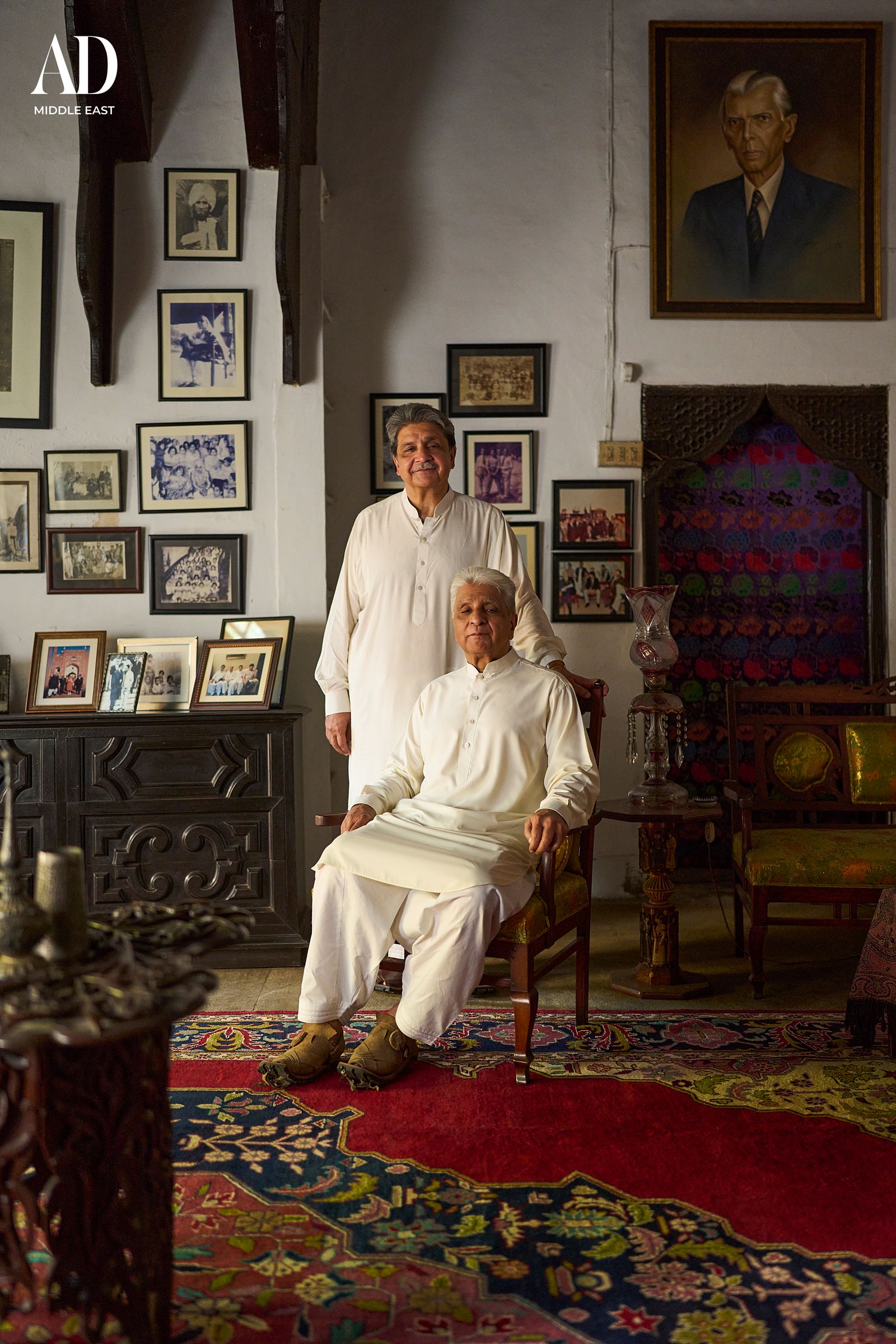
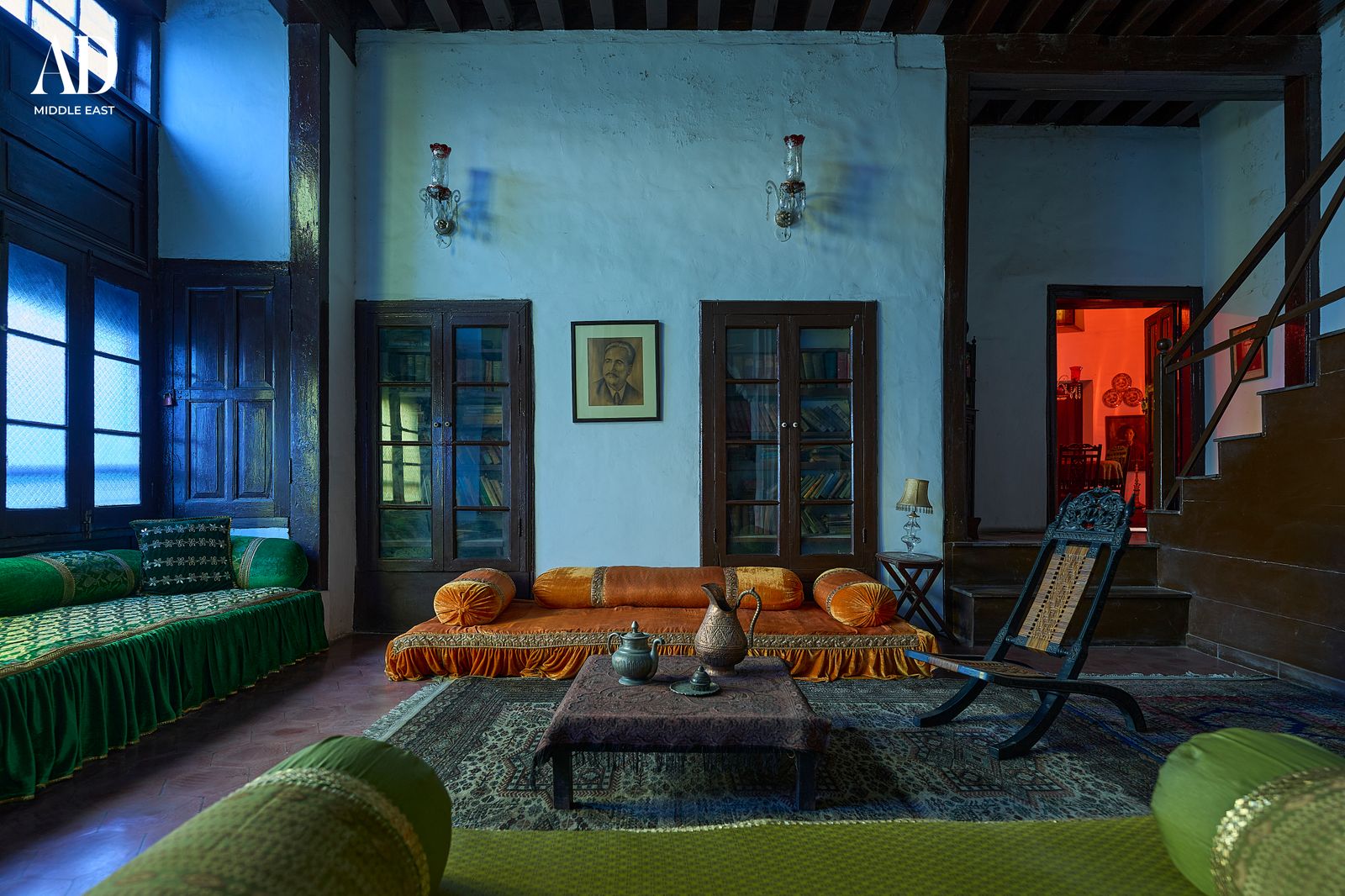
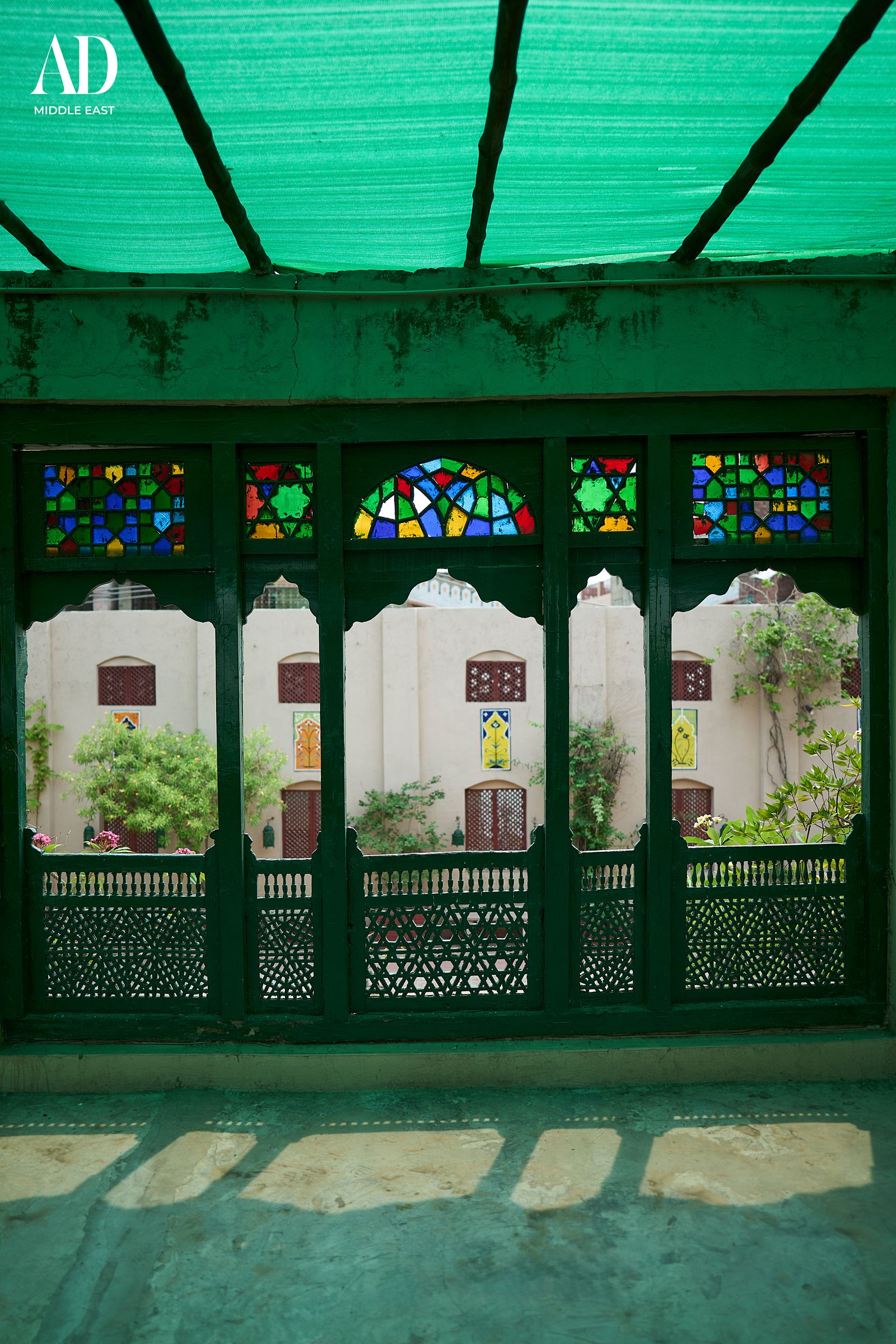
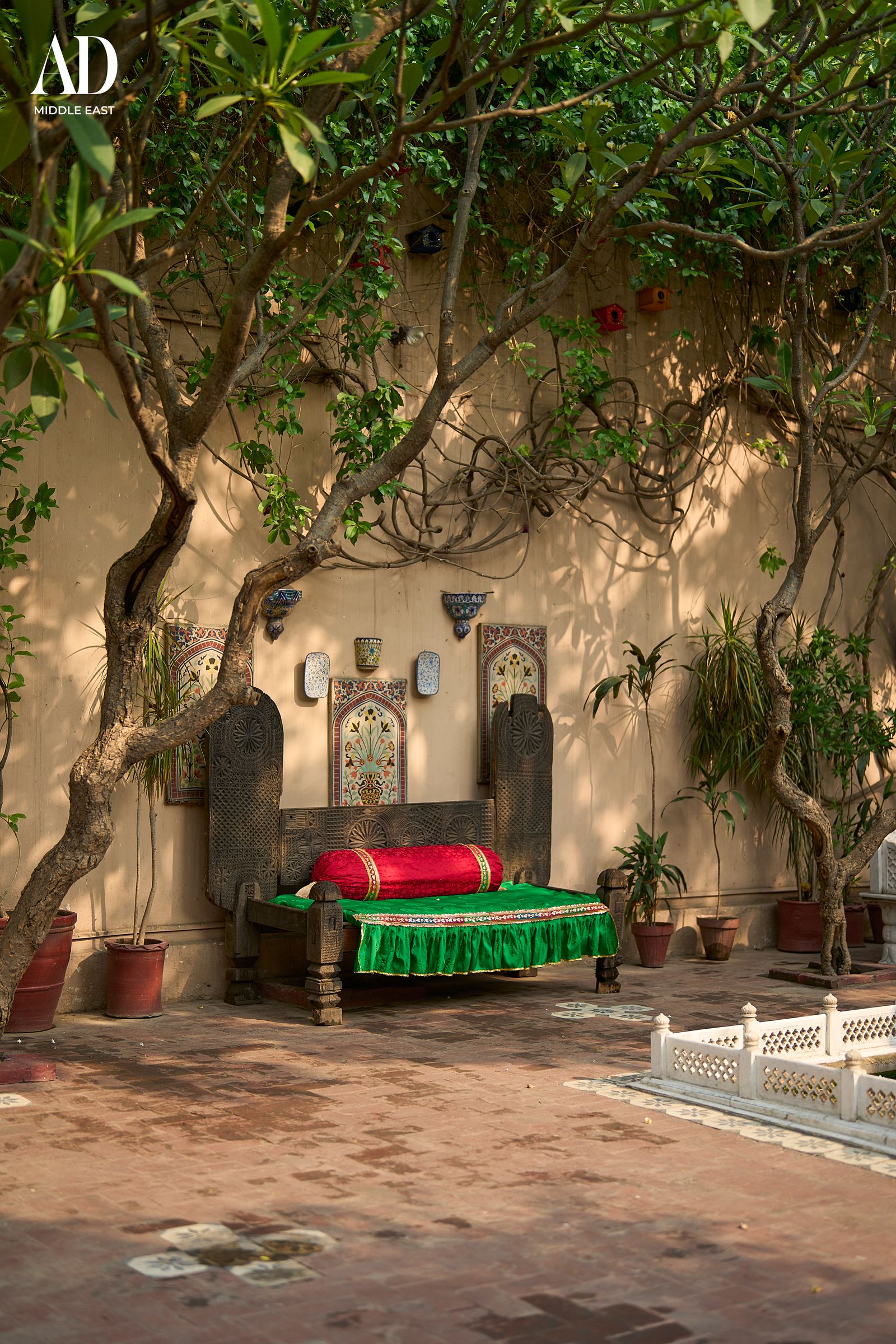
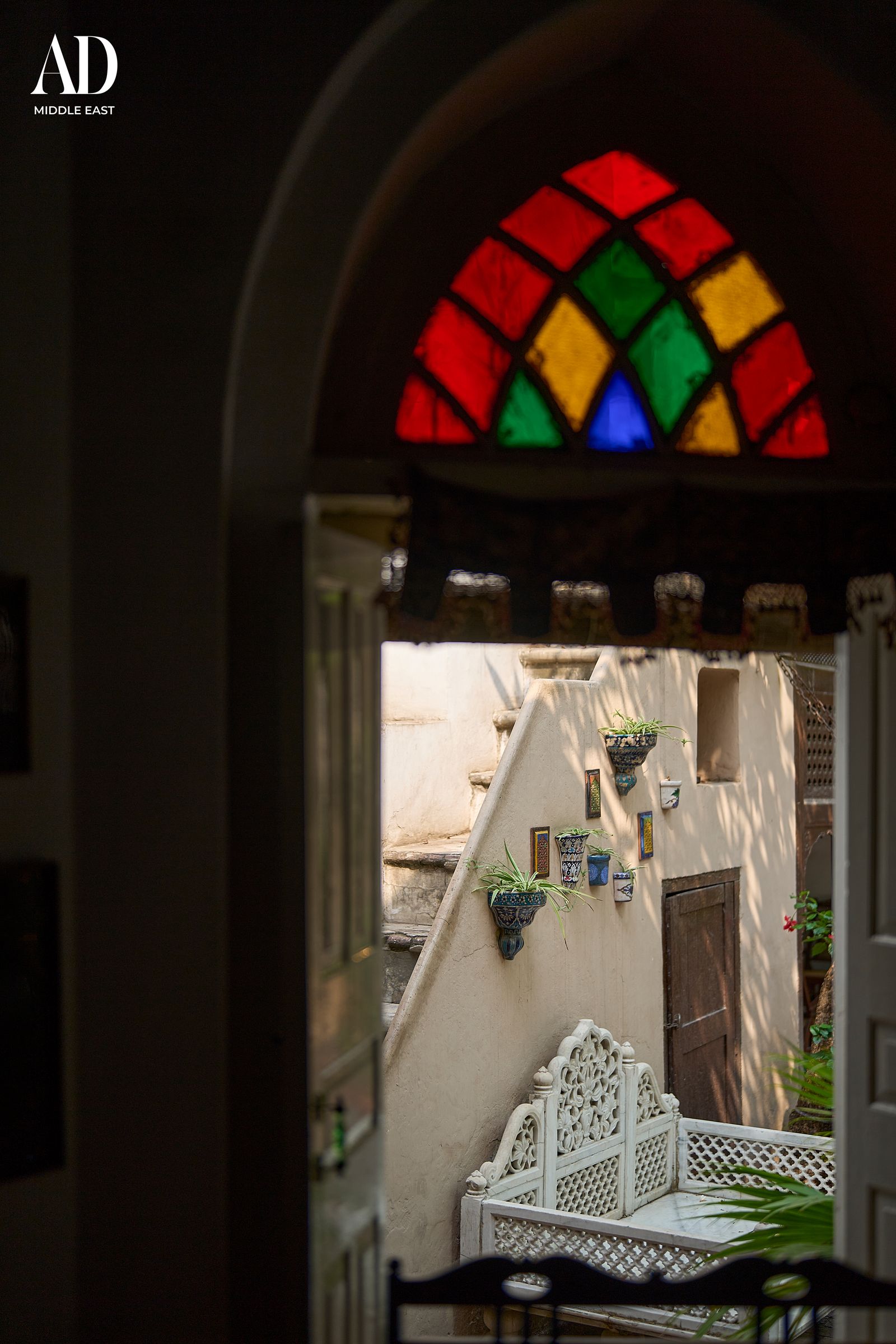
Photography · Architectural Digest Middle East, 2025
As featured in
Inside a 400-year-old Lahore home still lived in today.
Architectural Digest Middle East visits Haveli Barood Khana, photographs the sitting room shared by Ali and his brother Omar, and speaks with the family about four decades of continuous restoration.
Read the story on AD Middle East"One of the rooms was done by my great-great-grandfather. I sit in it most mornings. It is difficult to be careless about what you build when you are sitting inside what was built for you."
Ali Shah
What survives is what is used. The rest becomes a museum.